Speaking
From the economics of AI to autonomous agents and enduring human strengths, these talks connect technological change to questions audiences care about.
Signature keynote 01
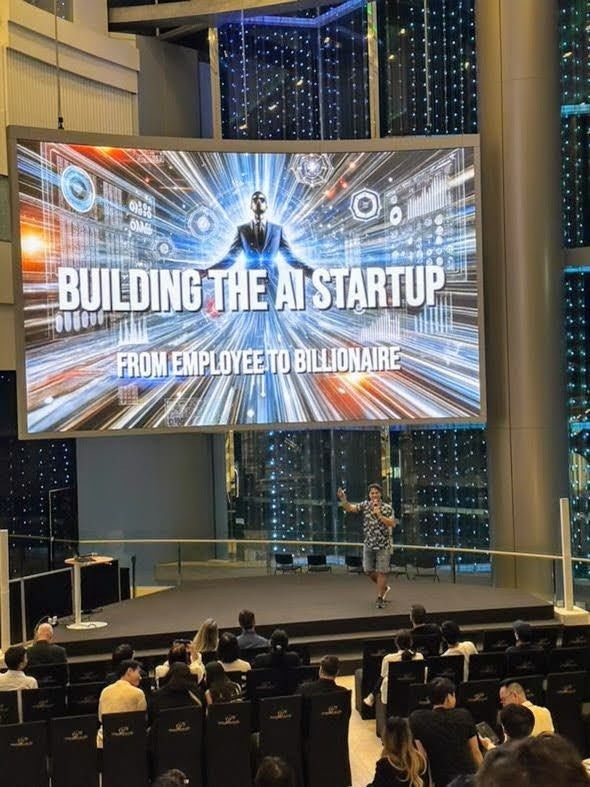
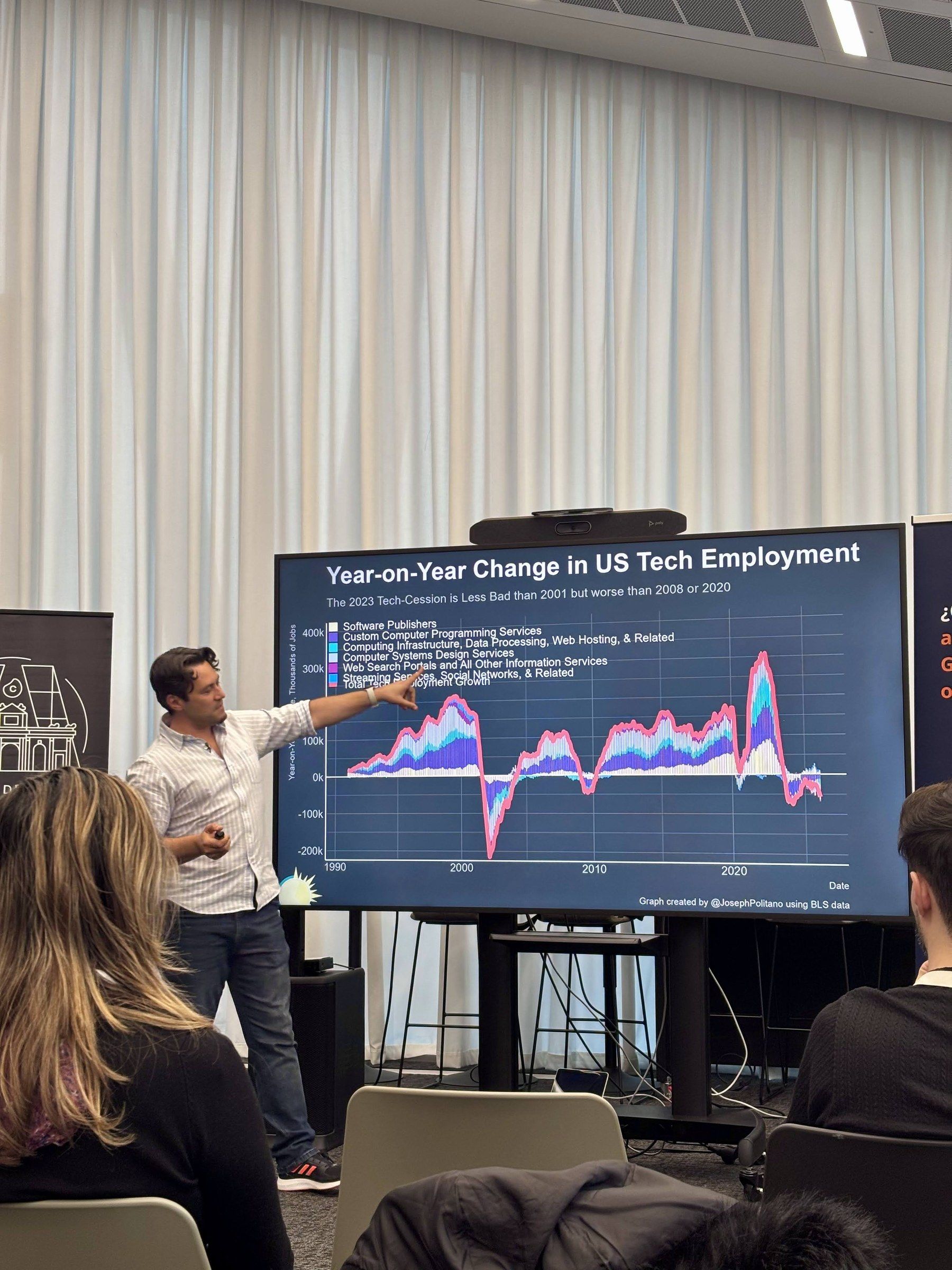
The End of Jobs?
What happens to work when intelligence becomes nearly free?
For generations, the value of work has been linked to what people know and what they can do. AI is forcing us to reconsider that relationship. As machines become capable of more complex cognitive tasks, the boundaries between human contribution, software and automation start to move. The question is not just whether AI can perform a task. It’s what happens to our institutions, incentives and identities when it can.
Audience outcomes
- Understand how cheaper AI capabilities change the economics of work.
- Separate immediate task-level automation from bigger claims about the future of employment.
- Leave with the strategic questions individuals and organizations should be asking now.
- Leadership summits
- Business conferences
- Future-of-work events
Signature keynote 02
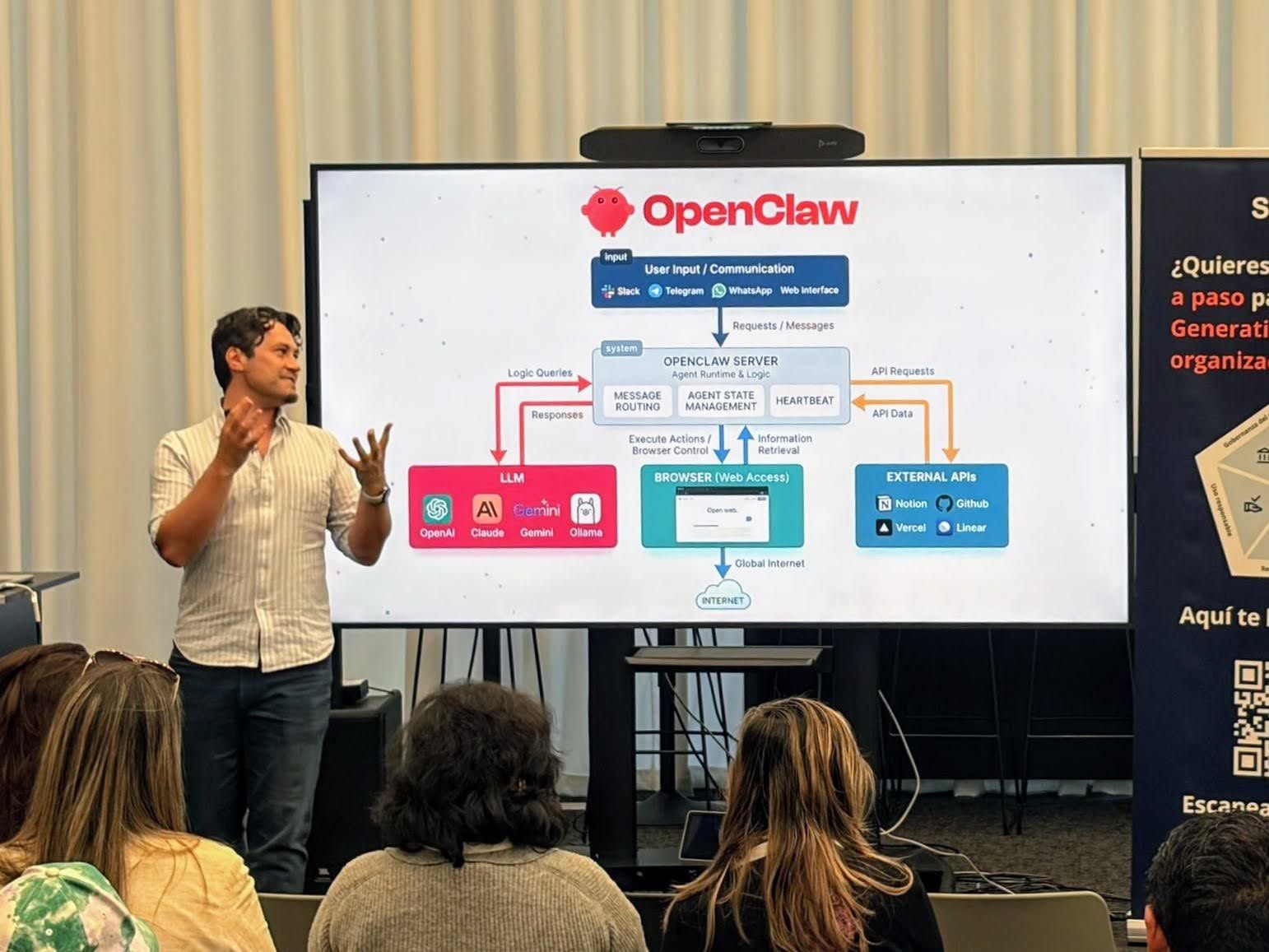
From Copilots to Agents
The next AI shift isn’t just answering questions. It’s taking action.
The first popular wave of generative AI taught millions of people to ask models questions. The next wave is about systems that can act: using tools, managing workflows, operating across applications and carrying tasks through to completion. The result is a grounded map of an important technical shift — and a better set of questions about where humans should remain in control.
Audience outcomes
- Distinguish assistants, copilots, workflows and autonomous agents.
- Understand the core patterns: tool use, planning, execution, feedback and human oversight.
- Recognize the practical opportunities — and limits — of deploying agents today.
- Technology conferences
- Product & engineering teams
- Innovation events
Signature keynote 03
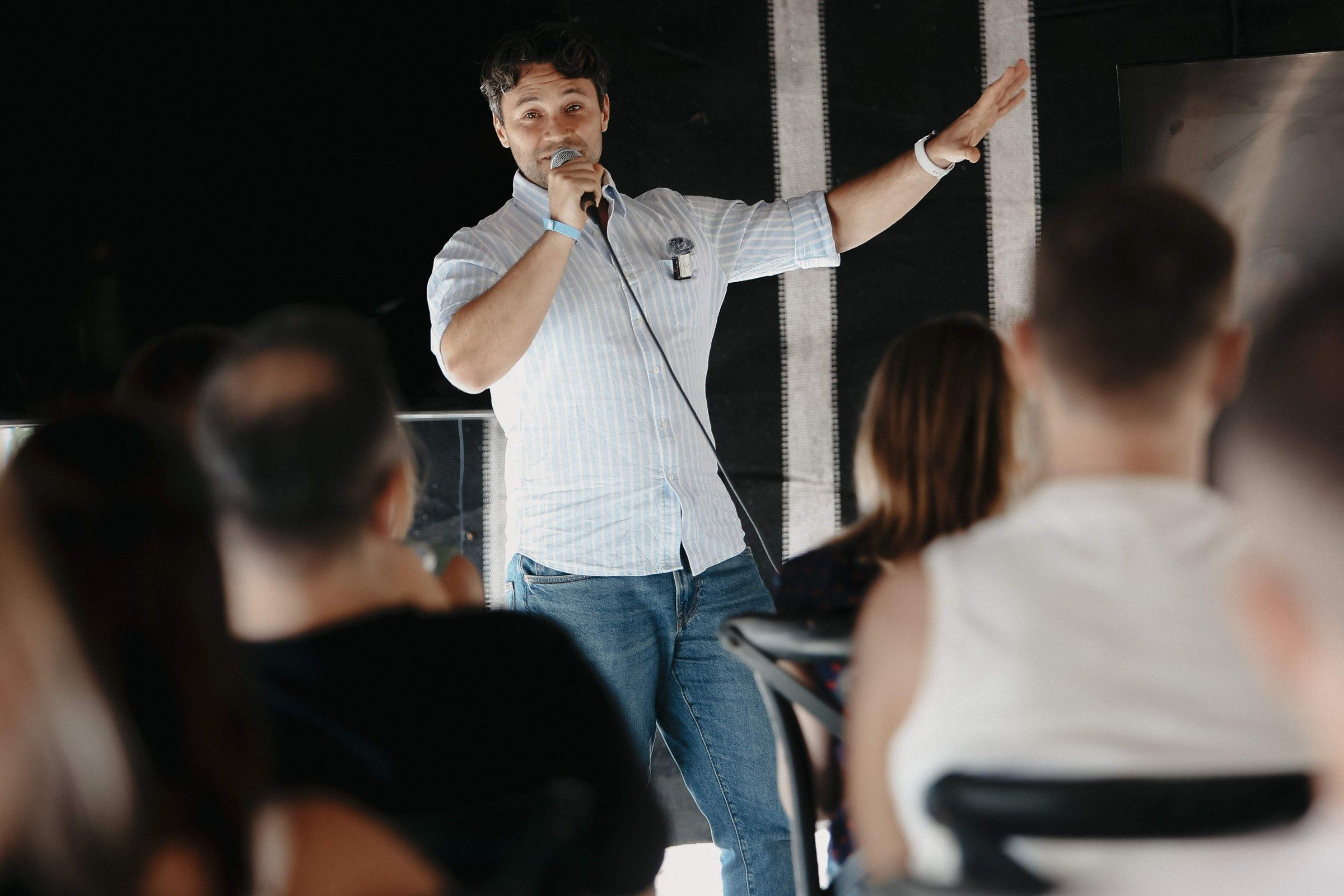
The Human Moats
What becomes more valuable when intelligence is no longer scarce?
When capable AI systems can produce answers, designs, plans and software cheaply, producing competent output is no longer enough to stand apart. It reframes the AI conversation from a defensive question — “What can machines not do?” — to a more useful one: “What should people become exceptionally good at?” The result is a practical and optimistic framework for leaders, creators and individuals navigating a world of increasingly abundant intelligence.
Audience outcomes
- Explain the five human moats and how they reinforce one another.
- Think clearly about value creation when AI output is plentiful.
- Identify concrete ways to invest in human capabilities and real-world relationships.
- Leadership events
- Creative industries
- Company offsites
- Broad audiences
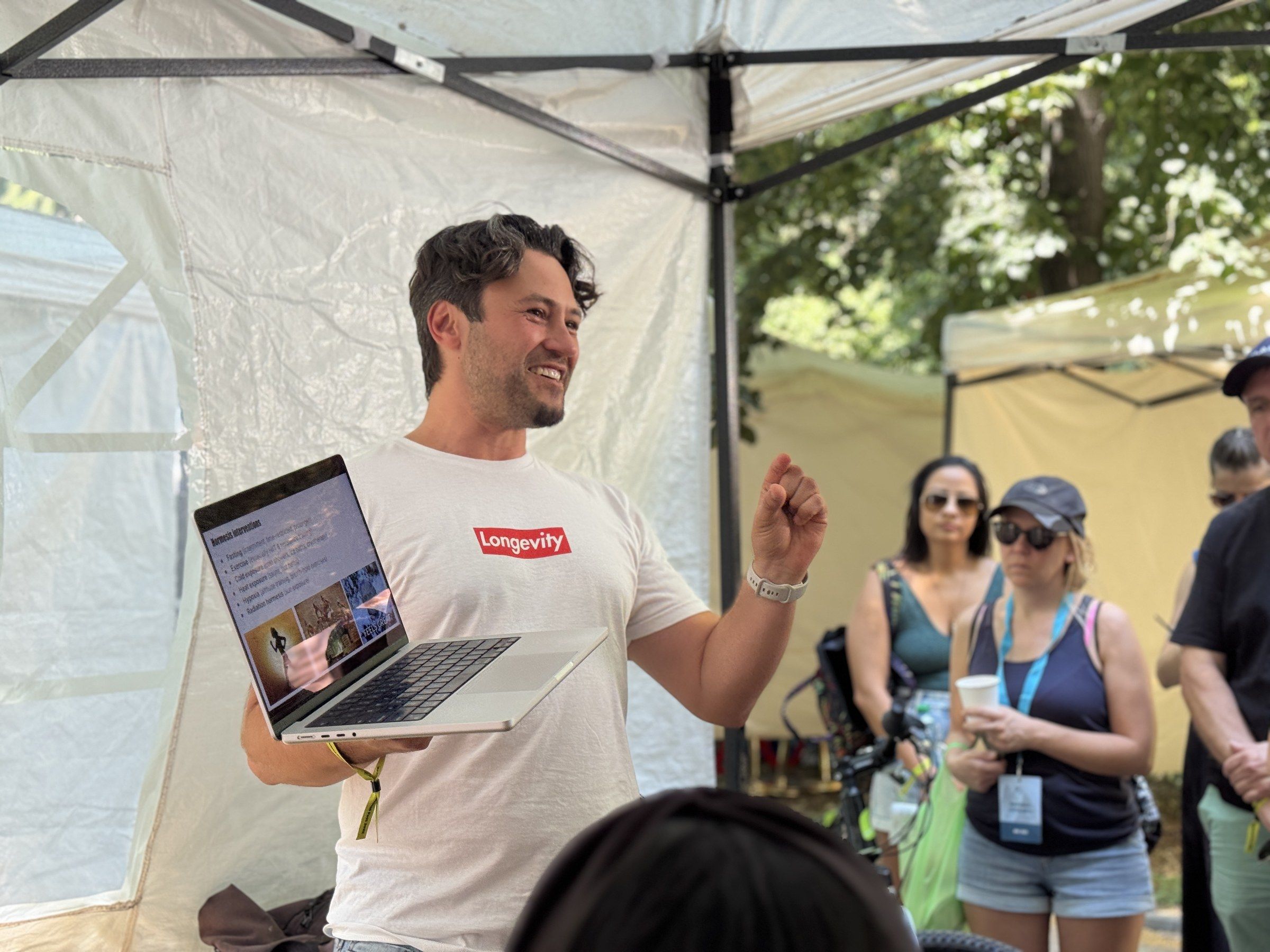
Longevity science
The End of Ageing?
What science now knows about slowing — and even reversing — biological ageing.
For most of history, ageing was treated as fate. A growing body of biomedical research treats it as a process: a set of mechanisms that can be measured, studied and — in some organisms already — slowed down or partially reversed. The result is a clear, optimistic and honest picture of one of the most consequential scientific frontiers of our time — and practical, evidence-based ideas audiences can take home.
Audience outcomes
- Understand the main biological mechanisms behind ageing.
- Tell the difference between strong evidence, promising early results and hype.
- Leave with practical, evidence-based habits that matter most today.
- Broad audiences
- Health & wellbeing events
- Company offsites
- Festivals
Formats
Talks can be adapted to an audience and event brief. Pick the format that fits your programme — or combine a keynote with a hands-on session.
- 01
Keynote
The main-stage format: one big idea, made tangible with live examples and real data.
- 02
Panel & conversation
A technically literate, plain-spoken voice on panels about AI, work, startups and the future.
- 03
Interactive session
Unconference-style sessions where the room drives the questions — great for longevity and AI deep-dives.
- 04
Hands-on workshop
Teams map their own work and build their first AI automations. See workshops →
- 05
Hackathon coaching
Mentoring teams through building with AI agents, from idea to working demo.
Speaking proof
36 sessions. 12 countries.
Keynotes, panels and workshops at events including Nomad Summit Chiang Mai, We Make Future Bologna, Porto AI Week, Mindstone Madrid, Startup Grind Shenzhen and ETH CDMX — and a Best Speaker award on the AI Cruise.
Full list of appearancesOrganizer kit
Everything you need to make the case.
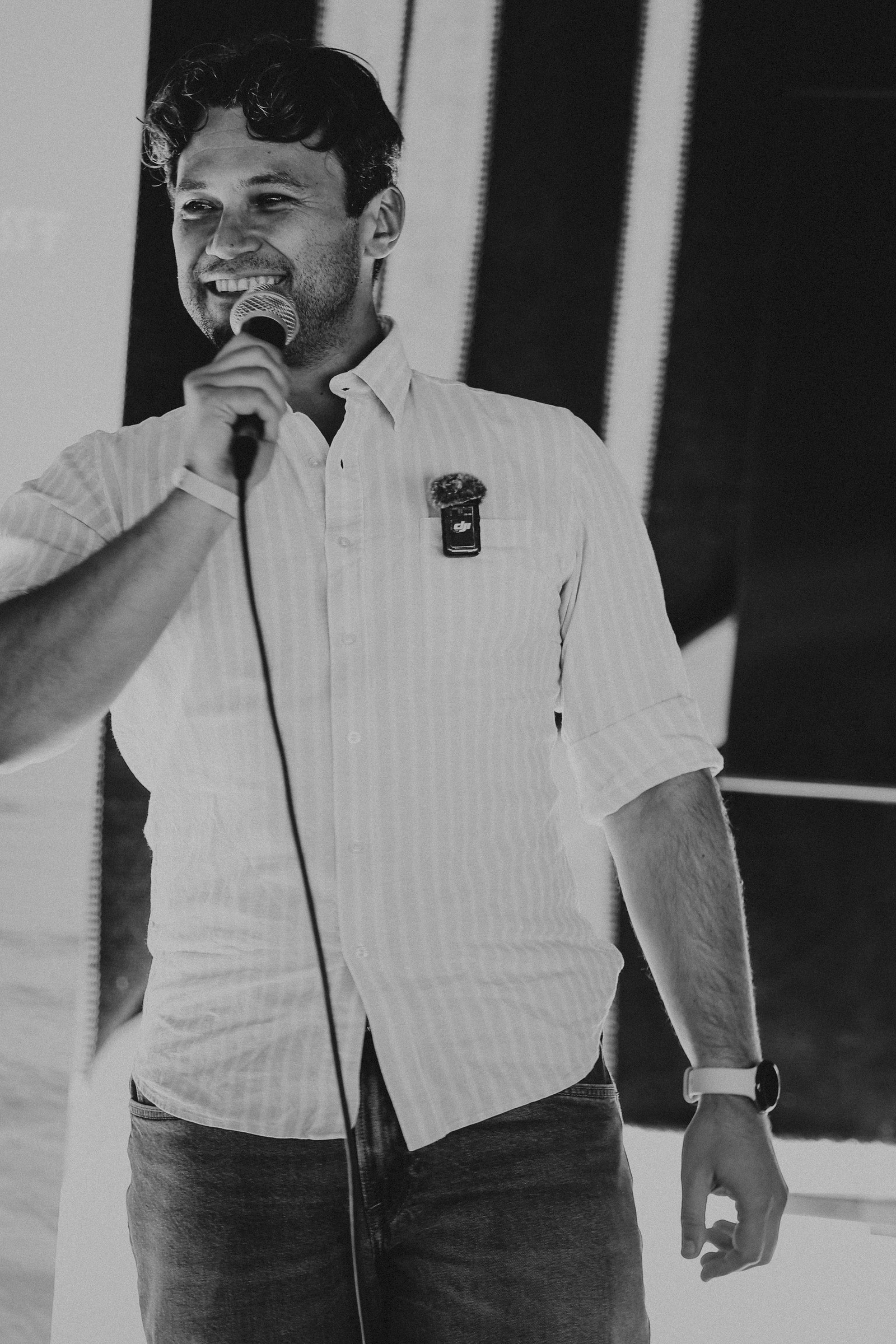
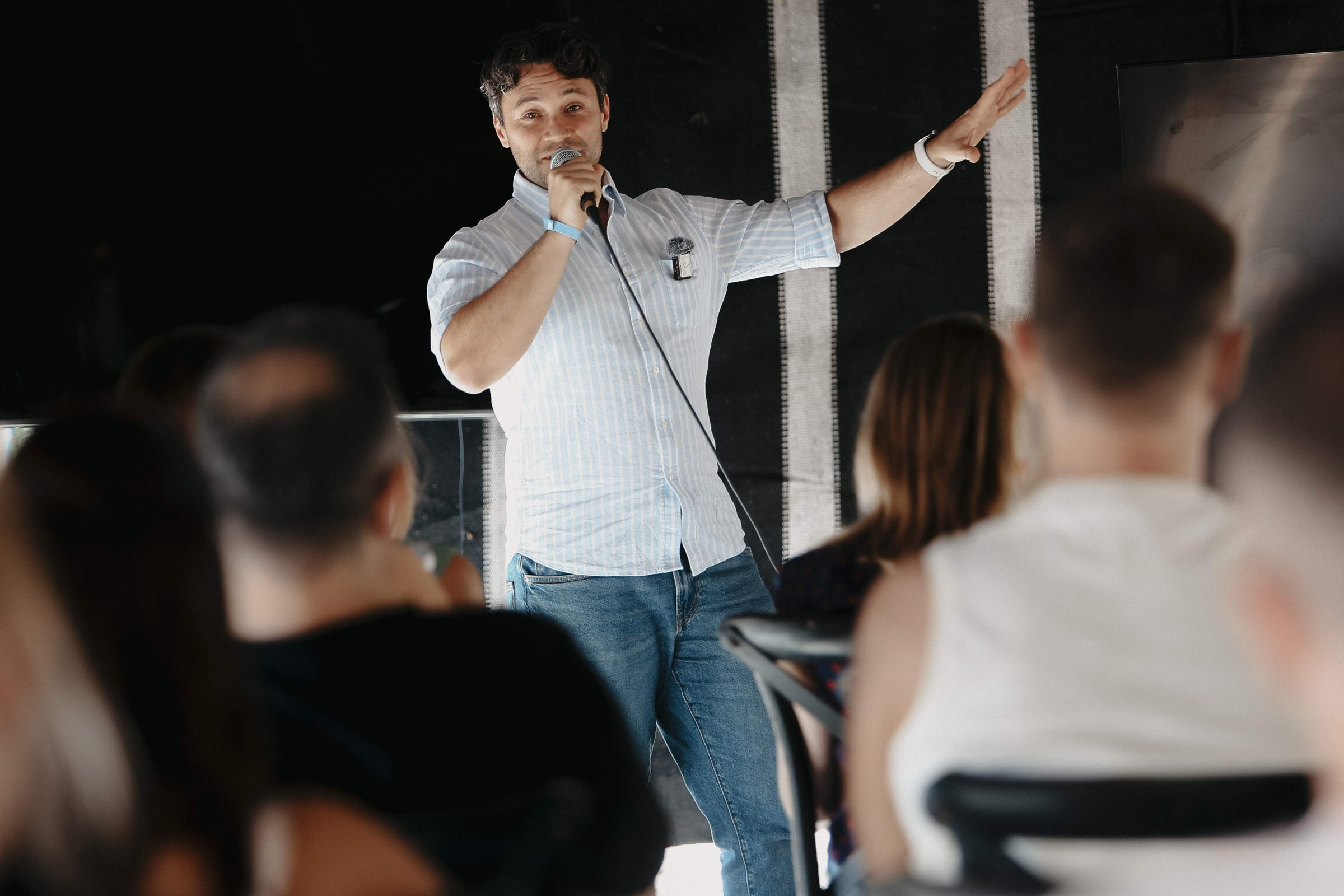
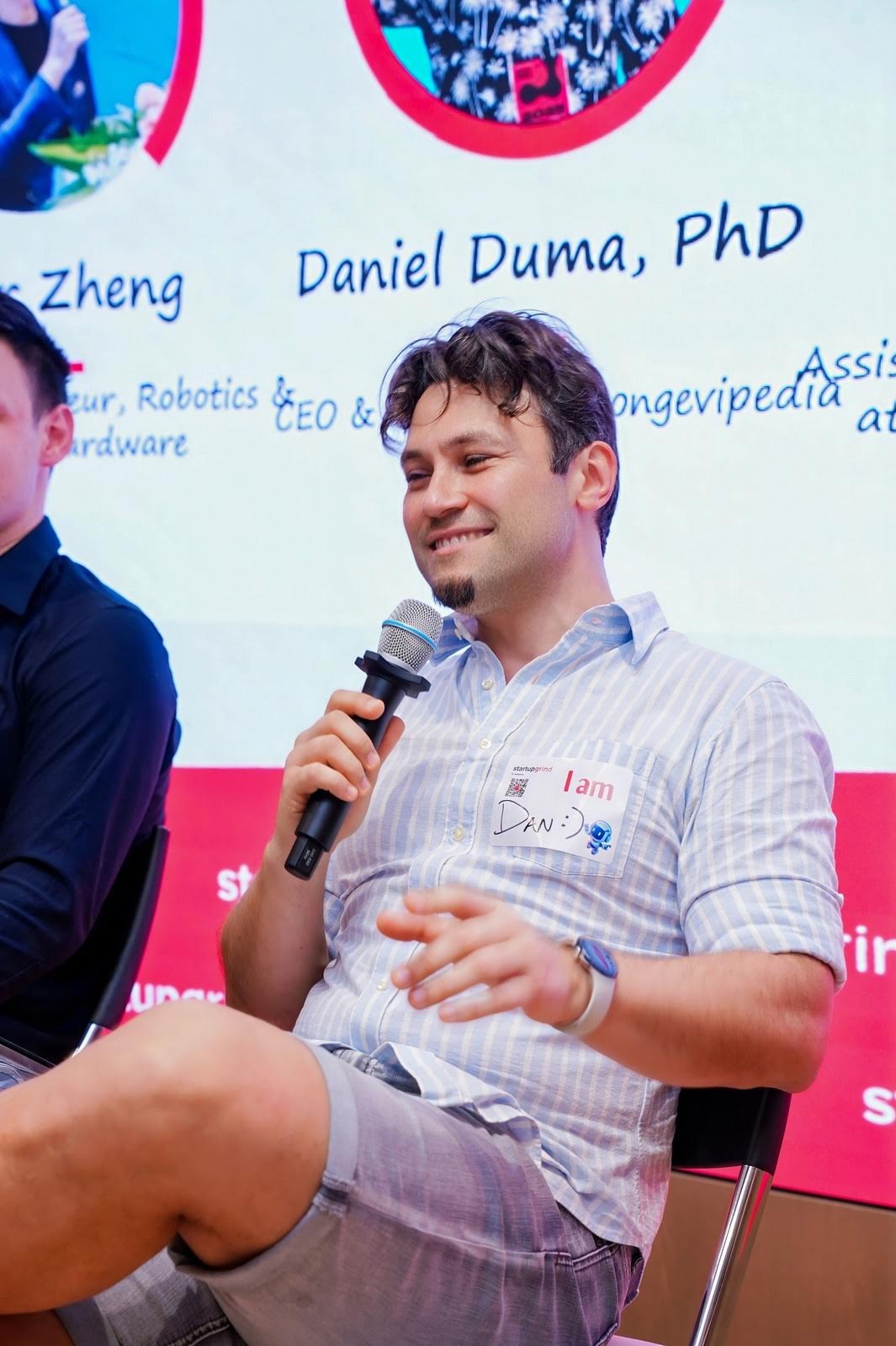
Bios, a stage introduction and photos — ready to paste into your programme, forward to a colleague or read from the stage.
Daniel Duma, PhD, is a keynote speaker on AI agents, the future of work and the science of longevity. He holds a PhD in artificial intelligence, has worked as an engineer at Google and on Amazon Alexa, and is the founder and CEO of Longevipedia. He has spoken at events in 12 countries.
Daniel Duma, PhD, is a keynote speaker exploring what remains valuable when intelligence becomes cheap. He holds a PhD in artificial intelligence, has worked as an engineer at Google and on Amazon Alexa, has founded several startups and today leads Longevipedia. His talks connect what AI can do right now — from autonomous agents like OpenClaw to the latest employment data — with the bigger questions it raises for businesses, careers and human identity. He has given 36 keynotes, panels and sessions across 12 countries, and won Best Speaker at the AI Cruise (Nomad Cruise 17). He also speaks about the science of longevity.
Our next speaker used to spend his Thursdays at Google asking the founders awkward questions from the audience mic. He has a PhD in artificial intelligence, has built technology at Google and on Amazon Alexa, and today runs Longevipedia while managing a small team of AI agents. He is here to ask a question that should keep all of us up at night — in a good way: when intelligence becomes cheap, what remains valuable? Please welcome Dr Daniel Duma.
Planning a conference, leadership gathering or company event? Let’s find the right conversation for your audience.